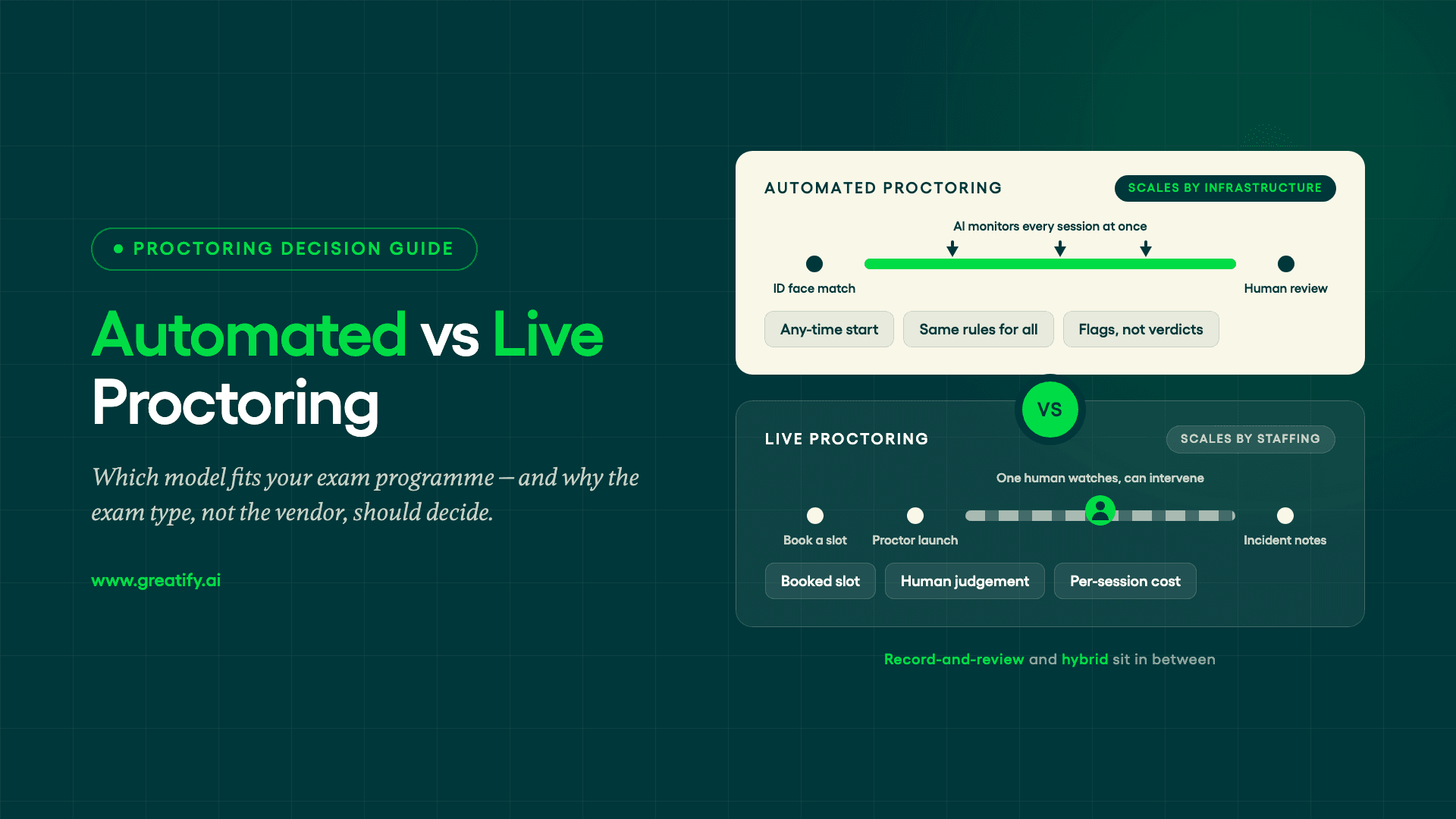
Every exam programme that moves online has to answer the same question: who, or what, watches the candidate? The two honest answers are automated proctoring, where software monitors every session and humans review what it flags, and live proctoring, where a remote human watches in real time and can step in. Vendors sell both, some sell blends of the two, and the marketing makes them sound interchangeable. They are not. This is the decision piece: what each does well, where each breaks, and how your exam type should settle it. For the definitions, start with our plain-English guide to proctoring.
The decision carries more weight than it did three years ago. In the Higher Education Policy Institute's 2025 survey of 1,041 UK undergraduates, 88% said they had used generative AI for assessments, up from 53% the year before. "Just trust them" has quietly left the table for any exam whose result matters.
The short answer
Automated proctoring fits programmes with volume: thousands of candidates testing in the same window, exams that need to start when the candidate is ready rather than when a proctor is free, and institutions that want one consistent standard and a reviewable record for every session. Live proctoring fits programmes with lower volume and a hard requirement for a human who can intervene mid-exam, usually because a regulator, accreditor or licensing body says so. Record-and-review and hybrid services sit between the two. Most institutions running semester exams at scale end up automated; most licensure bodies with a written mandate for intervention end up live. This article is for everyone in between.
What automated proctoring does
Automated proctoring (AI proctoring, in most vendor copy) replaces the person at the front of the hall with software that runs on every candidate's device at once. Before the exam it verifies identity with a face match. During the exam it tracks face and gaze through the webcam, watches for a second face, and monitors the device for app switches, tab changes and device swaps, while a lockdown browser closes off the rest of the machine. When something crosses a threshold, the system raises an alert in real time and attaches the evidence — a clip, a timestamp, a screenshot.
The part administrators should hold vendors to is what happens next. In a well-designed system a flag is a question for a human, not a verdict. ExamX, for instance, routes flagged moments to reviewers with the evidence attached and applies no automatic penalties; its published figures are 99.2% detection accuracy and under 0.1% false positives at up to 100,000+ concurrent candidates. Whatever platform you evaluate, ask for both numbers and who reviews the flags.
Where it is strongest
Scale is the obvious one: software does not need a rota, so 5,000 candidates at 9 am on a Monday is the same job as 50. Consistency is the quieter advantage. Every candidate gets the same rules applied the same way, which matters when a student appeals and asks why they were flagged and their neighbour was not. Scheduling flexibility follows, because exams can open in a window rather than at a booked slot, and the audit trail is complete by default, since every session is recorded and indexed against its flags.
Where it has limits
It cannot talk to a candidate. If a webcam fails or a fire alarm goes off, it can log the event and alert an administrator, but it cannot make the call a human would make in the room. False positives are the second limit: a candidate who reads aloud, glances at a second monitor, or has a family member walk through the frame will generate flags, and if nobody reviews them with care, integrity tooling becomes a source of complaints. Accommodations are the third. Students with disabilities or unusual testing environments can trip generic behaviour models, and the review workflow has to allow for that before the exam rather than after the appeal.
What live proctoring does
Live online proctoring puts a trained human on the session by webcam and screen share. The proctor confirms identity, checks the room, launches the exam, watches for the duration, and can pause the session, ask the candidate to show the desk, or end the exam if the rules are broken. Meazure Learning's ProctorU is the best-known example: its Live+ tier pairs software with a live-proctored launch, continuous human monitoring and active intervention.
Where it is strongest
Immediate intervention is the whole point. When a regulator requires that a human can stop an exam the moment something goes wrong, only live proctoring qualifies. A live proctor also handles the messy edge cases as they happen: a dropped connection, a confused candidate, a room that does not fit the rules. For a small cohort sitting a career-defining exam, that judgement is worth paying for.
Where it has limits
It scales by hiring people. Every session needs a proctor, each proctor watches a limited number of candidates, and candidates must book a slot, so your exam window is your vendor's staffing plan. Consistency depends on the individual: two proctors can reach different decisions about the same behaviour, and that shows up in appeals. The cost is per session and steps up with exam length. Cameron University's published ProctorU fee schedule — one university's schedule, not the vendor's rate card — runs from $17.50 for an exam of 60 minutes or less booked ahead to $42.50 for up to 240 minutes, and from $26.25 to $51.25 for on-demand starts. At a semester's worth of sessions the arithmetic decides on its own; our ProctorU pricing guide walks through it.
Record-and-review and hybrid: the middle ground
Two models sit between the poles. Record-and-review proctoring captures audio, video and screen activity for the full session, lets AI flag anomalies, and has a human review the flags after the exam. Nobody intervenes while it is running. ExamSoft's ExamMonitor add-on works this way, and so do ProctorU's Record+ and Review+ tiers. It costs less than live, produces solid evidence, and suits mid-stakes exams where a finding after the fact is acceptable.
Hybrid proctoring keeps AI monitoring as the base layer and adds a human who joins the session only when the AI escalates. Honorlock's Live Pop-In is the clearest example, delivered inside Canvas, Blackboard, Brightspace and Moodle. The trade-off is that escalated sessions inherit some of live proctoring's staffing and cost model while everyday monitoring stays automated.
Automated vs live proctoring: side by side
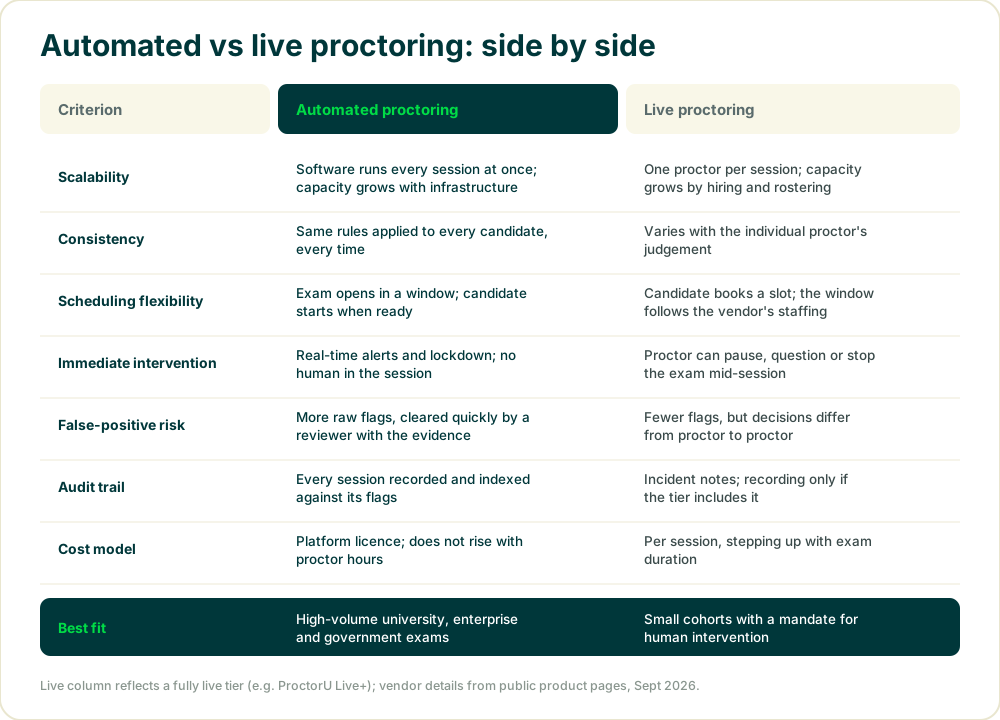
One row deserves a comment. Automated systems generate more raw flags than a human would, but a reviewer with the evidence in front of them clears the harmless ones quickly; the real risk is a programme with no review step at all.
Let the exam type decide
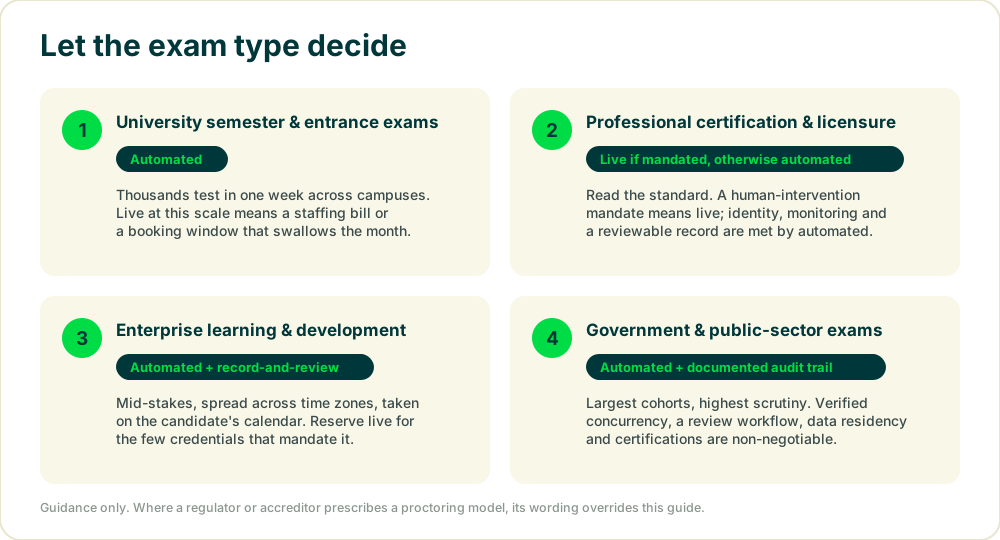
University semester and entrance exams. Thousands of candidates test in the same week and programmes span campuses. Automated proctoring is the workable default; live proctoring at this scale means either a staffing bill that dwarfs the platform cost or a booking window that stretches exam week into exam month. SRM Institute of Science and Technology ran 45 days of continuous exams on ExamX with a peak of around 1,800 students writing concurrently and zero disruptions. The detail is in the SRM case study.
Professional certification and licensure. Here the question is the mandate. If the licensing body or accreditor requires a human who can intervene mid-exam, choose live proctoring and budget for it. If it requires identity verification, monitoring and a reviewable record, automated or record-and-review proctoring meets the requirement at far lower cost. Read the standard itself, not a vendor's interpretation of it.
Enterprise learning and development. Most corporate assessments are mid-stakes and taken across time zones, when the candidate's calendar allows. Automated fits, record-and-review is often enough for the lower-stakes tier, and live is worth reserving for the few external credentials that mandate it.
Government and public-sector exams. Recruitment and public examinations combine the largest cohorts with the highest scrutiny. Automated proctoring is the only model that reaches the scale, and the audit trail matters more than anywhere else because any result may be challenged. The non-negotiables are verified concurrent capacity, a documented review workflow, data residency the department accepts, and compliance certifications you can put in the tender file.
The vendor patchwork problem
A proctoring service is a layer, not an exam platform. ProctorU, Honorlock and ExamMonitor all assume your exam is authored, delivered and graded somewhere else. That is fine when proctoring is the only gap, and it is how institutions end up with an LMS quiz tool, a delivery client, a proctoring vendor and a spreadsheet for analytics, each with its own contract and support queue. The alternative is a platform where proctoring is one stage of the lifecycle: in ExamX, the same system authors the paper, delivers it on web and tablets with a lockdown environment, proctors every candidate with AI, evaluates the answers and reports item-level analytics. If you are weighing a layer against a platform, our three-way comparison with ExamSoft and ProctorU lays out the stack arithmetic.
Data security and compliance
Both models process sensitive data: video of a person, their identity documents, sometimes a view of their home. Settle these before signing, whichever model you choose. Where are recordings and identity data stored, and under which regime? SOC 2, ISO 27001 and GDPR are the usual baseline; ExamX holds all three and runs on a 99.9% uptime SLA. How long is data retained, and who can access it? For live proctoring, add a question about the proctors themselves: who employs them, where they sit, and what they can see and export. For automated proctoring, ask how the model was tested across skin tones, lighting conditions and disabilities. A vendor that cannot answer in writing is not ready for a public-sector tender.
Where ExamX stands
ExamX proctors exams with automated AI: identity verification, face and gaze detection, a lockdown browser, and real-time alerts for multiple faces, device swaps and off-screen activity, with every flag reviewed by a human and no automatic penalties, at up to 100,000+ concurrent candidates. It does not offer a live human proctor who watches and intervenes during the session. If your accreditor mandates that, a live service such as ProctorU's Live+ is the honest recommendation for those exams. For everything else, an automated model on a single platform is usually the better fit. The online proctoring software page has the full feature set, and our guide to preventing cheating in online exams covers the controls that sit around proctoring.
Six questions before you decide
- Does any regulator, accreditor or licensing body require a human who can intervene mid-exam? If yes, that exam needs live proctoring.
- What is your true peak concurrency, and will the vendor put a verified number in the contract?
- Who reviews flags, how quickly, and what is the documented false-positive rate?
- Do candidates need to start on their own schedule, or can they book a slot?
- What does total cost look like at your annual session count, with exam durations included?
- Is proctoring the only gap, or are you adding a fourth vendor to a stack that needs consolidating?
Automated proctoring vs live proctoring: FAQs
What is the difference between automated proctoring and live proctoring?
Automated proctoring uses software to monitor every candidate at once and raises flags for humans to review. Live proctoring puts a remote human on each session who watches in real time and can stop the exam. One scales by infrastructure, the other by staffing.
Is automated proctoring as reliable as live proctoring?
For detection and consistency, a well-built automated system is at least as reliable; ExamX publishes 99.2% detection accuracy with under 0.1% false positives. What it cannot do is exercise judgement mid-exam.
What is record-and-review proctoring?
The full session is recorded, AI flags anomalies, and a human reviews the flags after the exam. Nobody intervenes during it. ExamSoft's ExamMonitor and ProctorU's Record+ and Review+ tiers work this way.
What is hybrid proctoring?
AI monitors every session and a human joins only when the AI escalates. Honorlock's Live Pop-In is the clearest example.
Which is cheaper, automated or live proctoring?
Live is priced per session and rises with exam length; one university's published ProctorU schedule runs from $17.50 to $51.25 per exam. Automated is usually part of a platform licence, so cost does not rise with proctor hours.
Does ExamX offer live proctoring?
No. ExamX is automated AI proctoring with human review of every flag and no automatic penalties. If an accreditor mandates a live human proctor, a live service is the right answer for those exams.
The bottom line
Choose live proctoring when a mandate requires a human who can intervene, and budget for the per-session cost and the scheduling it brings. Choose automated proctoring when volume, consistency, scheduling flexibility or cost decide the matter, which for most universities, enterprises and public bodies is most of the time. Book a demo of ExamX and bring your largest concurrent exam and your accreditor's exact wording to the conversation.
Competitor capabilities summarised from each vendor's public product pages, September 2026. Verify current features, certifications and pricing directly with each vendor during procurement.