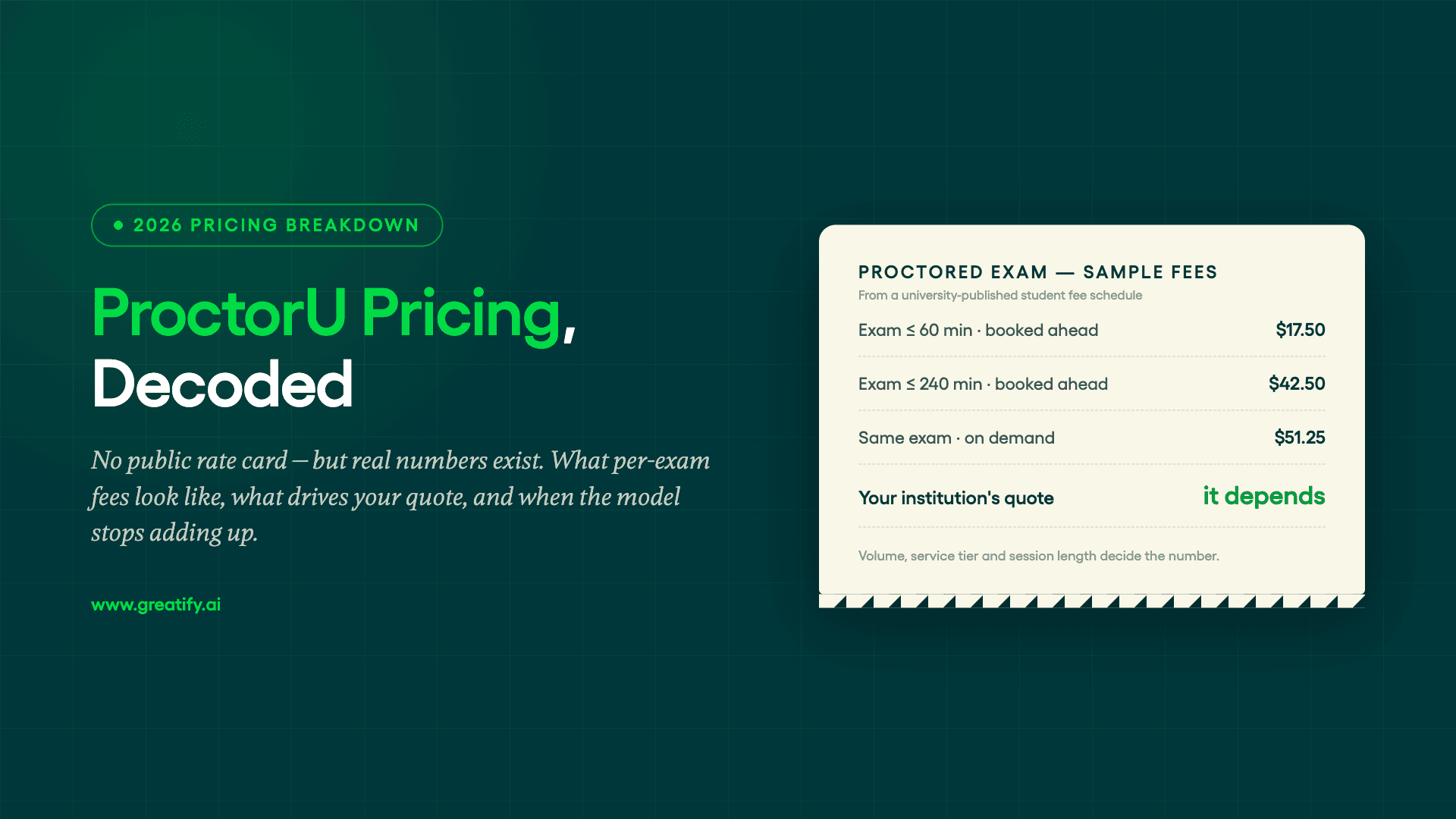
The first thing you notice when evaluating ProctorU is that there is no pricing page. That is deliberate. Like most enterprise proctoring vendors, ProctorU — part of Meazure Learning — quotes each institution based on volume, service mix and contract structure. But "quote-based" does not mean unknowable. Universities that pass fees to students publish their schedules, and those pages give the clearest public picture of what proctored exams actually cost. This guide walks through the model, the real numbers, and the question the per-session model eventually runs into.
How ProctorU structures its pricing
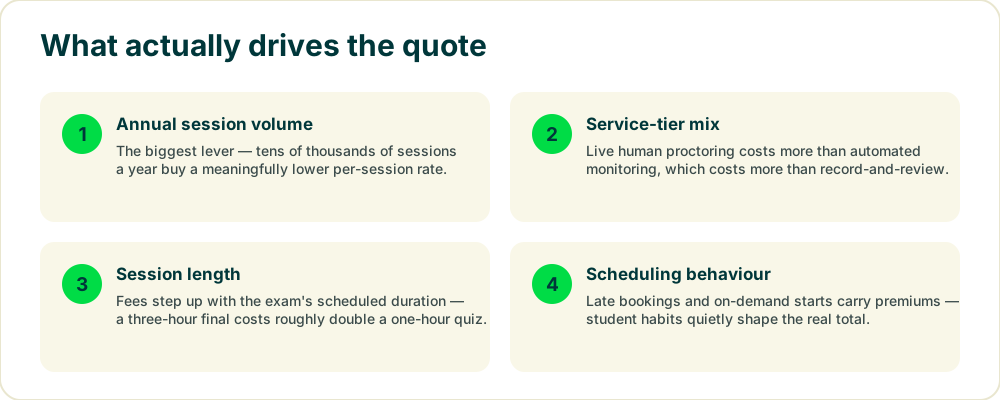
The standard model is per-session billing: every proctored attempt is charged individually, and three things set the rate. The service tier — a live human proctor (Live+) costs more than automated monitoring, which costs more than record-and-review. The scheduled session length — fees step up with exam duration. And volume — institutions committing to large annual session counts negotiate lower per-session rates, usually inside an annual or multi-year contract with a committed floor, SLA terms and integration support.
There is also a fourth lever institutions discover after signing: scheduling behaviour. Late bookings and on-demand starts carry premiums, so the real annual bill depends partly on how organised your students are.
What the published numbers look like
Where universities pass fees to students, the numbers are public. Cameron University's published fee page is a current, concrete example of per-exam pricing by duration and scheduling window:
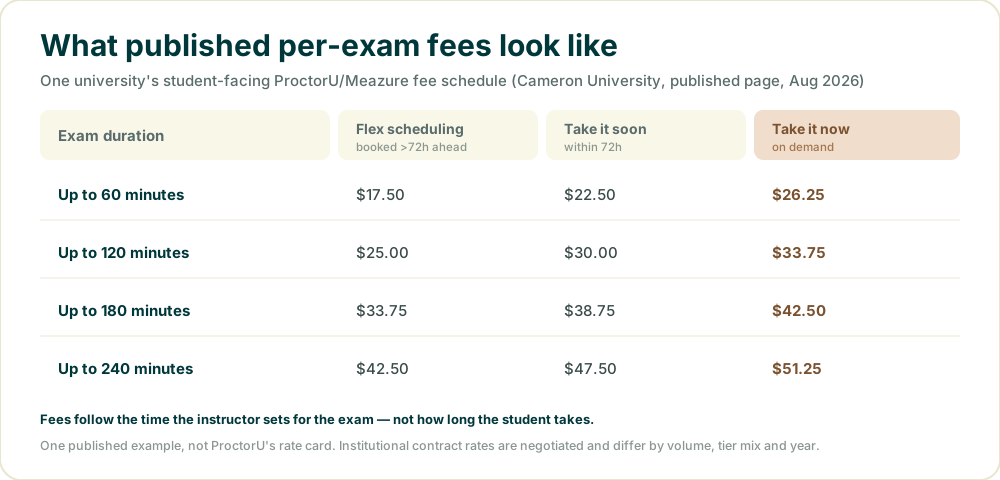
Two details in that schedule deserve attention. Fees follow the duration the instructor sets, not the time the student uses — a generous time limit is a pricing decision. And the on-demand premium is real: the same one-hour exam costs 50% more taken immediately than booked three days ahead. One published schedule is not ProctorU's rate card — institutional contracts land elsewhere — but it anchors the conversation in something better than "contact sales".
What the fee buys — and what it doesn't
A ProctorU fee buys the proctoring session: identity verification, monitoring at your chosen tier, recording and incident reporting. It is good at that job; it is also the whole job. The exam itself is authored somewhere else, delivered in your LMS or exam driver, graded in another workflow and analysed in whatever reporting you have. For an institution running a full digital examination programme, the proctoring line is therefore one of three or four vendor lines — and the others rarely publish pricing either.
That framing matters more than any individual rate, because the alternative to negotiating a better per-session fee is changing the shape of the bill entirely.
The arithmetic that changes at scale
Per-session pricing is friendly at low volume: a certification programme running 2,000 exams a year pays for what it uses. The same model at university scale reads differently. Fifty thousand proctored exams a year at even the modest published rates above is a seven-figure annual line item — before adding the authoring tool, the delivery platform and the staff time that stitches them together. Every additional exam makes the bill strictly bigger, which quietly discourages the frequent assessment that good teaching wants.
Platform pricing inverts that. ExamX includes AI proctoring — 99.2% detection accuracy, under 0.1% false positives, 100,000+ concurrent candidates — as one stage of a platform that also authors papers with AI, delivers them on web and tablets, evaluates answers including handwritten descriptive scripts, and reports analytics. One contract, and the marginal cost of one more proctored exam stops being a budgeting event. SRM ran 80,000+ paperless exams across five campuses on exactly that model — the case study has the numbers.
The alternatives, honestly grouped
Proctoring-only: Honorlock is the closest like-for-like alternative — Chrome-extension proctoring inside Canvas and Blackboard, with AI monitoring that can escalate to a live proctor. Same layer, different delivery model.
Assessment suites with proctoring included: Mercer | Mettl and Talview bundle proctoring into broader talent-assessment platforms — strongest for entrance, placement and hiring tests.
Full-stack: ExamX replaces the proctoring line and the three lines around it. If consolidation is the goal, compare stacks rather than sessions — our 2026 platform shortlist and three-way comparison do that in detail.
Evaluating a ProctorU quote against your needs
- Model your real exam calendar — sessions per year, duration mix, and how much lands in finals week.
- Price the tiers separately: how many exams truly need a live proctor versus automated monitoring?
- Ask what late-booking and no-show behaviour cost last year at a comparable institution.
- Add the rest of the stack to the sheet: authoring, delivery, grading, analytics, and the integration hours between them.
- Then compare that full total against a single-platform quote for the same exam volume.
ProctorU pricing: FAQs
How much does ProctorU cost per exam?
Pricing is quote-based, but published university schedules give real reference points: $17.50 (up to 60 minutes, booked ahead) to $42.50 (up to 240 minutes) at Cameron University, rising to $51.25 on demand. Contract rates vary with volume and tier.
Who pays — students or the institution?
Both models exist. Some institutions absorb the cost; others pass the per-exam fee to students at booking.
Why do late bookings cost more?
Live proctoring is staffed, and short-notice sessions draw on standby capacity. Published schedules show roughly a 50% premium for on-demand starts.
What does the fee include?
The proctoring session only — identity checks, monitoring, recording, incident reports. Authoring, delivery, grading and analytics live elsewhere.
When does per-session pricing stop making sense?
At sustained high volume, where linear per-exam fees plus a multi-tool stack cost more than one platform that includes proctoring.
What are the main alternatives?
Honorlock for a like-for-like proctoring layer; Mettl and Talview for suites with proctoring included; ExamX for replacing the full exam stack.
The bottom line
ProctorU's pricing is opaque by design but not mysterious: per session, tiered by human involvement, stepped by duration, discounted by volume, and inflated by late bookings. If proctoring is genuinely your only gap, negotiate on tier mix and scheduling and it can serve you well. If it is one of three exam vendors on your books, the better question is not "what is the per-session rate" but "what does the whole stack cost per exam" — and that comparison is the one worth taking into your next budget cycle. Book an ExamX demo to price the single-platform version of your exam calendar.
Fee examples from Cameron University's publicly posted ProctorU/Meazure Learning fee schedule, August 2026; pricing model details from Meazure Learning's public pages. Rates vary by institution, contract and year — verify directly with the vendor.