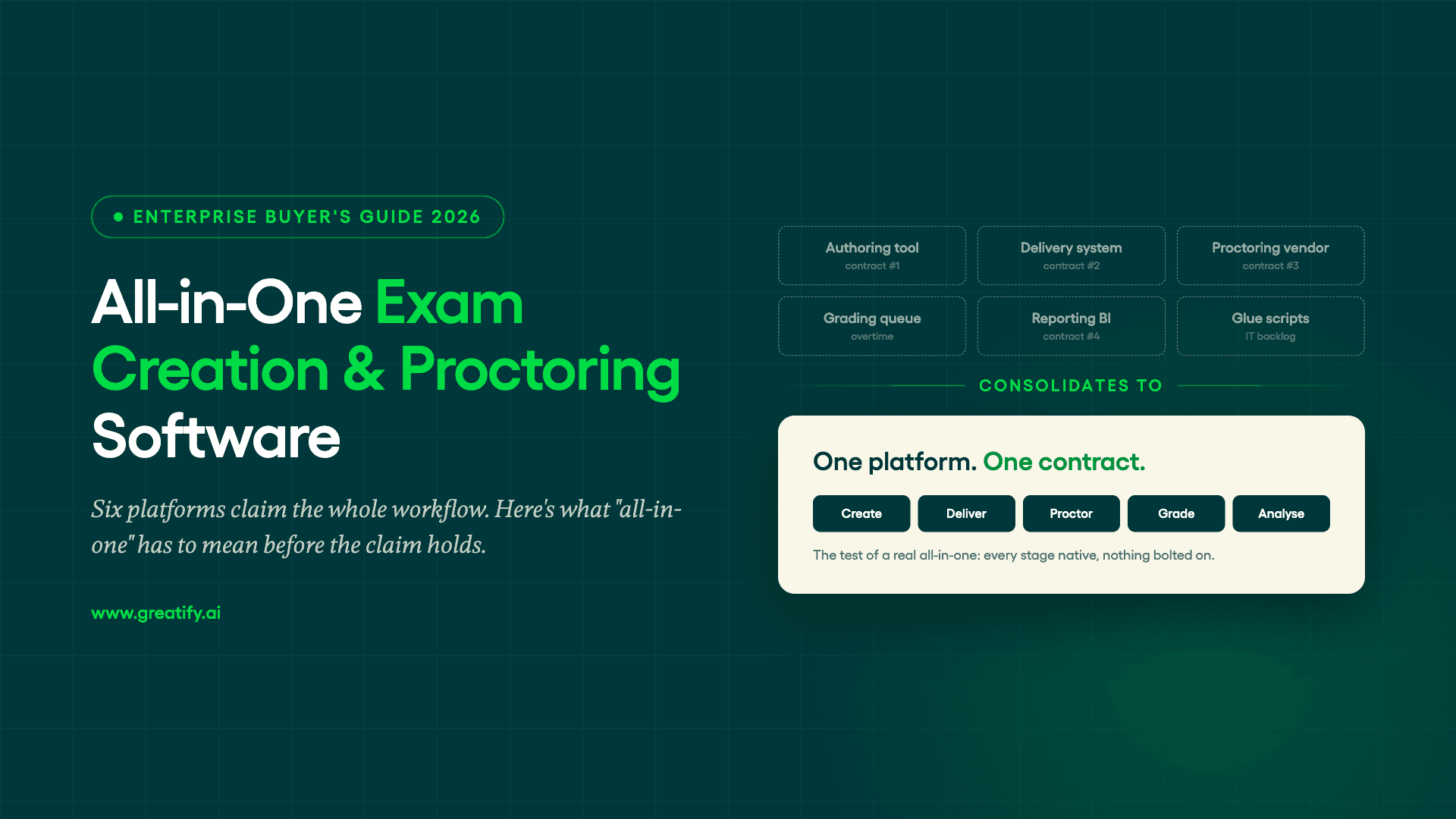
Enterprise exam programmes rarely fail at the exam; they fail at the seams. A question bank in one tool, delivery in another, a proctoring vendor on a per-session contract, results exported to a BI dashboard nobody trusts — and an L&D or certification team spending its time on integration tickets instead of assessment quality. "All-in-one exam creation and proctoring software" is the search that starts when that stack reaches its limit. This guide defines what all-in-one has to mean, tests six platforms against it, and gives you the enterprise checklist for the evaluation.
What "all-in-one" has to mean
Every vendor claims the phrase, so make it falsifiable. An exam has five stages: create the questions, deliver the sitting, proctor the candidates, grade the answers, analyse the results. All-in-one means owning all five natively — not "we integrate with a proctoring partner", not "grading exports to your LMS". Each stage that is really an integration is a contract, a support queue and a data handoff you still own.
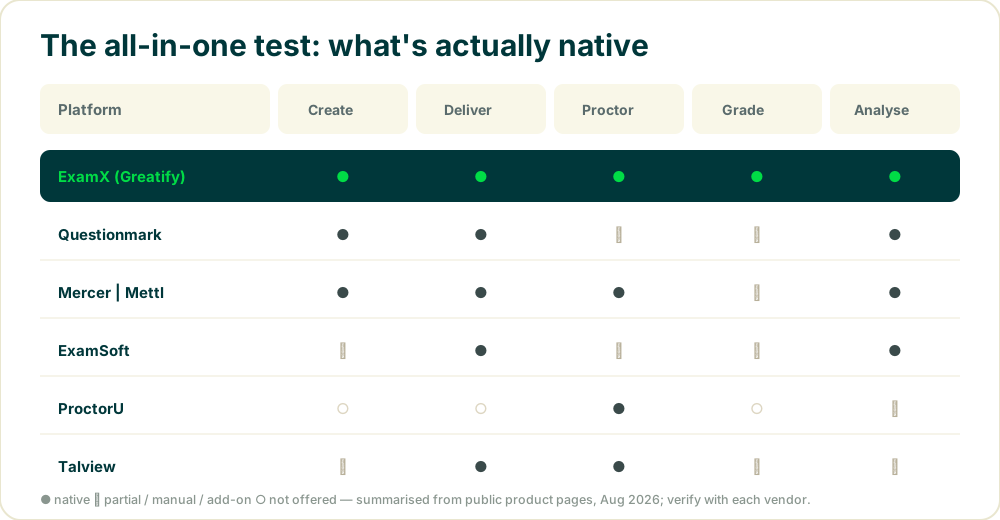
The matrix compresses what we found on each vendor's public pages; the sections below add the texture.
ExamX by Greatify — all five stages, one contract
ExamX is the platform on this list built end-to-end from the start. Exam creation is AI-driven: papers generated from your source content across 20+ question types with Bloom's-taxonomy coverage, bulk import from Word, Excel and PDF, moderated question banks, and authoring in 30+ languages — a real requirement for enterprises assessing across regions. Delivery runs on web, iPad and Android with lockdown and offline support; AI proctoring operates at 99.2% detection accuracy with under 0.1% false positives at up to 100,000+ concurrent candidates; grading is automatic, including rubric-aware AI evaluation of written answers with reviewer override; and item-level analytics land the moment a window closes.
The enterprise wrapping matters as much as the stages: SOC 2, ISO 27001 and GDPR compliance, a 99.9% uptime SLA, an auditable trail behind every identity check and flag, and integration with your HRMS, ATS and LMS so certification results reach the systems of record. Scale is proven in production — 80,000+ paperless exams in one cycle, documented in the SRM case study. The honest gaps: no live human proctor tier, and video-interview screening is not its territory.
Questionmark — when compliance reporting leads
Questionmark (part of Learnosity) positions squarely on secure enterprise exam programmes: broad question-type support, strong audit trails and reporting built for regulators, with scalable cloud delivery. It is the credible pick where the compliance officer outranks the L&D lead. Proctoring, however, arrives through third-party integrations rather than natively, and essay marking stays manual — so the all-in-one claim thins at exactly the stages this query is about.
Mercer | Mettl — when hiring assessment leads
Mercer | Mettl is the strongest suite here for talent measurement: psychometrics, coding assessments, high-volume screening, with AI proctoring built in. Enterprises running recruitment funnels and placement testing use it at serious scale. Its centre of gravity is the hire, though — curriculum-style exam creation and written-answer evaluation are not the design focus, which is why certification and training programmes often pair it with something else. That pairing is the stack this article is trying to end.
ProctorU — when a live human proctor is mandated
ProctorU (Meazure Learning) is a proctoring service, not a platform — and it offers the one thing nothing else on this list does: a live human proctor (Live+) who watches the session and can intervene, which some regulated certification schemes explicitly require. Exams run in your LMS or exam driver; ProctorU secures the sitting, per session. By design it creates, grades and analyses nothing, so for this query it is a stack component, not a stack replacement. We decoded its per-session economics in the ProctorU pricing guide.
ExamSoft — when offline typed delivery is the requirement
ExamSoft (Turnitin) owns one stage outright: secure, offline-capable typed delivery through its Examplify app, the standard in professional credentialing programmes where connectivity cannot be assumed. Item banking is native but manual, proctoring is a record-and-review paid add-on (ExamID/ExamMonitor), and essay marking is human — a delivery specialist that leading enterprises pair with other tools rather than an end to the pairing.
Talview — when interviews and exams meet
Talview blends AI video interviewing with proctored assessment, and its impersonation and deepfake-detection work is genuinely relevant to remote hiring at enterprise scale. Where the assessment programme is hiring-led — interviews plus screening tests in one candidate journey — it fits naturally. For certification and training examinations, its creation and evaluation tooling is not the design centre, which keeps it a strong stage rather than the whole.
The economics, in enterprise terms
The stack's cost hides in places procurement rarely prices. Four tools means four contracts renewing on four calendars, four vendors in every security review, four support lines during a certification window, and at least one integration engineer who can never be reassigned. Per-session proctoring adds a line that scales with your own success: published university fee schedules show $17.50 to $51.25 per proctored exam depending on duration and scheduling, and at enterprise certification volume — tens of thousands of sittings a year — that alone is a six-to-seven-figure item before the other three tools bill anything.
Platform pricing inverts the shape. One contract covers creation through analytics, proctoring included, so the marginal cost of assessing more people — the thing an L&D programme is supposed to want — stops being a budget conversation. The comparison worth taking to finance is never licence versus licence; it is the fully loaded stack, integration hours included, versus the platform.
What rollout actually looks like
Enterprises that do this well run it as one contained programme first, not a big-bang migration. Pick a single certification or compliance programme with a clear owner, run a full cycle on the platform — creation from your existing materials, delivery, proctoring, AI grading with your reviewers holding override — and wire the results into the HRMS or LMS before expanding. The first cycle doubles as calibration: reviewers watch the AI's rubric-based scores against their own judgment, and governance gets settled while the stakes are contained — who reviews proctoring flags, how a candidate contests a result, what the audit trail shows a regulator.
Expansion after a proven cycle is configuration, not persuasion. That pattern is not theoretical: SRM's first ExamX cycle covered 80,000+ exams across five campuses, and everything after it was a settings change.
The enterprise checklist
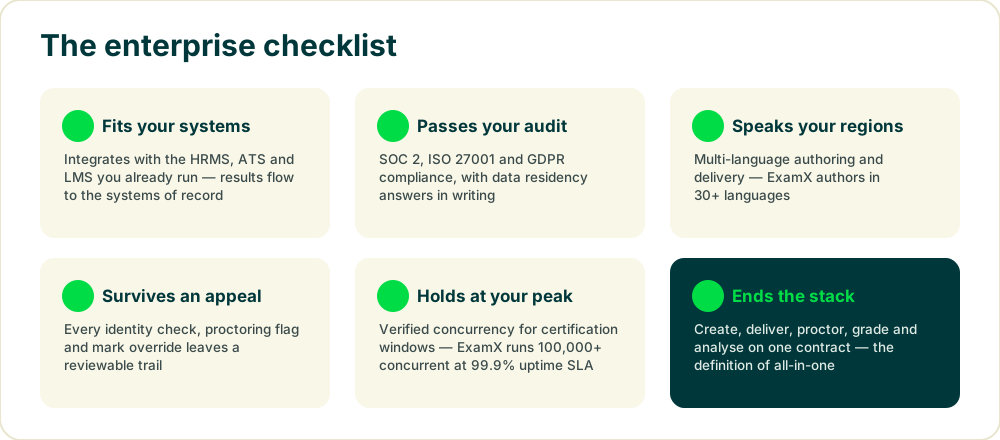
Six checks separate a demo from a decision. Ask which stages are native and which are integrations — the matrix above is the shape of that answer. Confirm results flow into your HRMS, ATS or LMS without a middleware project. Get compliance certificates and data-residency answers in writing, not on a slide. Verify language coverage against the regions you actually assess in. Demand verified concurrency for your certification window, with the uptime SLA in the contract. And trace one hypothetical incident — a flagged candidate contesting a result — through the platform's audit trail before you sign.
Then run your hardest real exam in the demo: the multilingual one, the written-answer one, the ten-thousand-candidate window. Sample quizzes demo beautifully everywhere.
Three evaluation mistakes enterprises keep making
Judging the platform on the vendor's sample content. A polished demo quiz proves the demo works. Bring your own material — the multilingual compliance module, the written-answer certification paper, the question bank trapped in the old tool — and watch the platform create, deliver and grade that. Import friction shows up in the first hour or never at all.
Sizing for the average month. Certification programmes are bursty: a quiet quarter, then a renewal window where thousands of candidates test in days. A platform priced or provisioned for the average collapses at the window — which is why verified concurrency and an uptime SLA belong in the contract, and why global programmes should test the offline behaviour on the worst connection in their worst region.
Accepting integrity claims without the second number. Every vendor quotes a detection rate; the operational number is the false-positive rate, because every false flag at enterprise scale is an employee or candidate contesting a result through HR. ExamX publishes both — 99.2% and under 0.1% — and any vendor unwilling to publish theirs is telling you which number they are prouder of.
All-in-one exam software: FAQs
What is all-in-one exam creation and proctoring software?
One platform owning all five exam stages natively — create, deliver, proctor, grade, analyse — with no bolted-on vendors. Count the native stages; that is the whole test.
What is the best all-in-one exam software for enterprises in 2026?
For the full lifecycle on one contract, ExamX — AI creation in 30+ languages, 99.2%-accuracy proctoring, AI grading of written answers, instant analytics, under SOC 2, ISO 27001 and GDPR. Questionmark and Mettl lead where compliance reporting or hiring assessment respectively outrank the lifecycle.
Why consolidate exam tools?
Fewer contracts, one audit, one support escalation, and certification data in one place feeding your systems of record.
Does ExamX integrate with an HRMS or LMS?
Yes — pre-hiring assessment, certification and compliance training unified, integrated with your HRMS, ATS and LMS.
Can all-in-one platforms run certification and compliance exams?
It is their strongest use case: fresh papers per sitting, auditable proctoring, automated scoring and analytics that satisfy auditors.
What should we check before buying?
Native stages, systems integration, written compliance answers, language coverage, verified concurrency, and the audit trail — then your hardest exam in the demo.
The bottom line
Point solutions built the enterprise exam stack; an all-in-one platform is how it gets retired. If one stage is genuinely your only gap, the specialists above serve it well. If the stack itself is the problem — contracts, seams, scattered results — the field narrows to platforms that pass the five-stage test, and in 2026 that shortlist is short. The wider market view is in our platform shortlist and three-way comparison — or book a demo and bring your certification calendar.
Competitor capabilities summarised from each vendor's public product pages, August 2026. Verify current features, certifications and pricing directly with each vendor during procurement.